Our Dead Sea Experience in Jordan: Floating at the Lowest Point on Earth
Written by Scott & Sophie
Location
Dead Sea
Country
Jordan
Travelled
August 2024
Location
Dead Sea
Country
Jordan
Travelled
August 2024
We expected the Dead Sea to be interesting, but we did not expect it to become such an impressive place.
Floating in water at the lowest exposed point on Earth is a really cool experience, but there was way more to the Dead Sea than we anticipated. The scenery, thick salt deposits, changing shoreline and incredible sunset make the Dead Sea an unforgettable destination!
Driving to the Dead Sea
We got to the Dead Sea by driving north from Aqaba, which is at one of the most interesting corners of the region. Israel is immediately beside Aqaba, Egypt is across the Gulf of Aqaba, and Saudi Arabia begins just south along the coast. Four countries share this narrow section of the Red Sea. It's worth noting that we came from Aqaba as part of a longer trip through Jordan, but the Dead Sea is only about an hour's drive from Queen Alia International Airport, Jordan's main international hub.
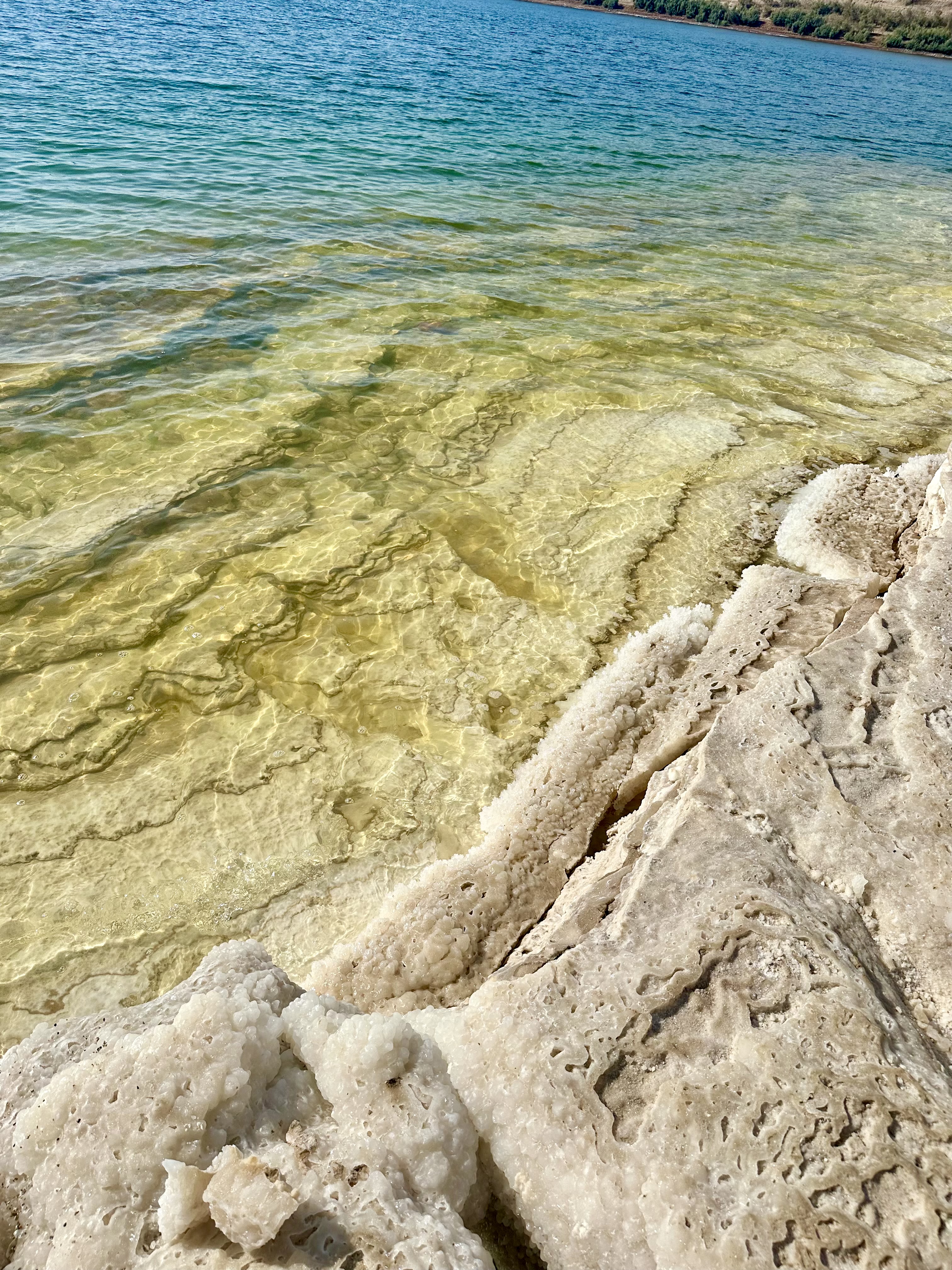
We kept driving north through Jordan, and the landscape was dry and rugged. Then we reached the beginning of the Dead Sea. The first views were unreal! The contrast between the blue water and the pale landscape surrounding it was impressive. Rugged hillsides rose from the shoreline, making the bright blue water really pop against the dry landscape.
Visiting the Lowest Exposed Point on Earth
Despite being labelled a sea, the Dead Sea is actually a landlocked salt lake. Its shoreline sits more than 400 metres below sea level, making it the lowest exposed land on Earth.
The road gradually descends toward the water, and signs along the way remind you how far below sea level you have travelled.
We stayed at a resort with its own private beach, which made accessing the Dead Sea easy. Having showers nearby was also important because this is not water you want drying on your skin for very long.
Floating in the Dead Sea
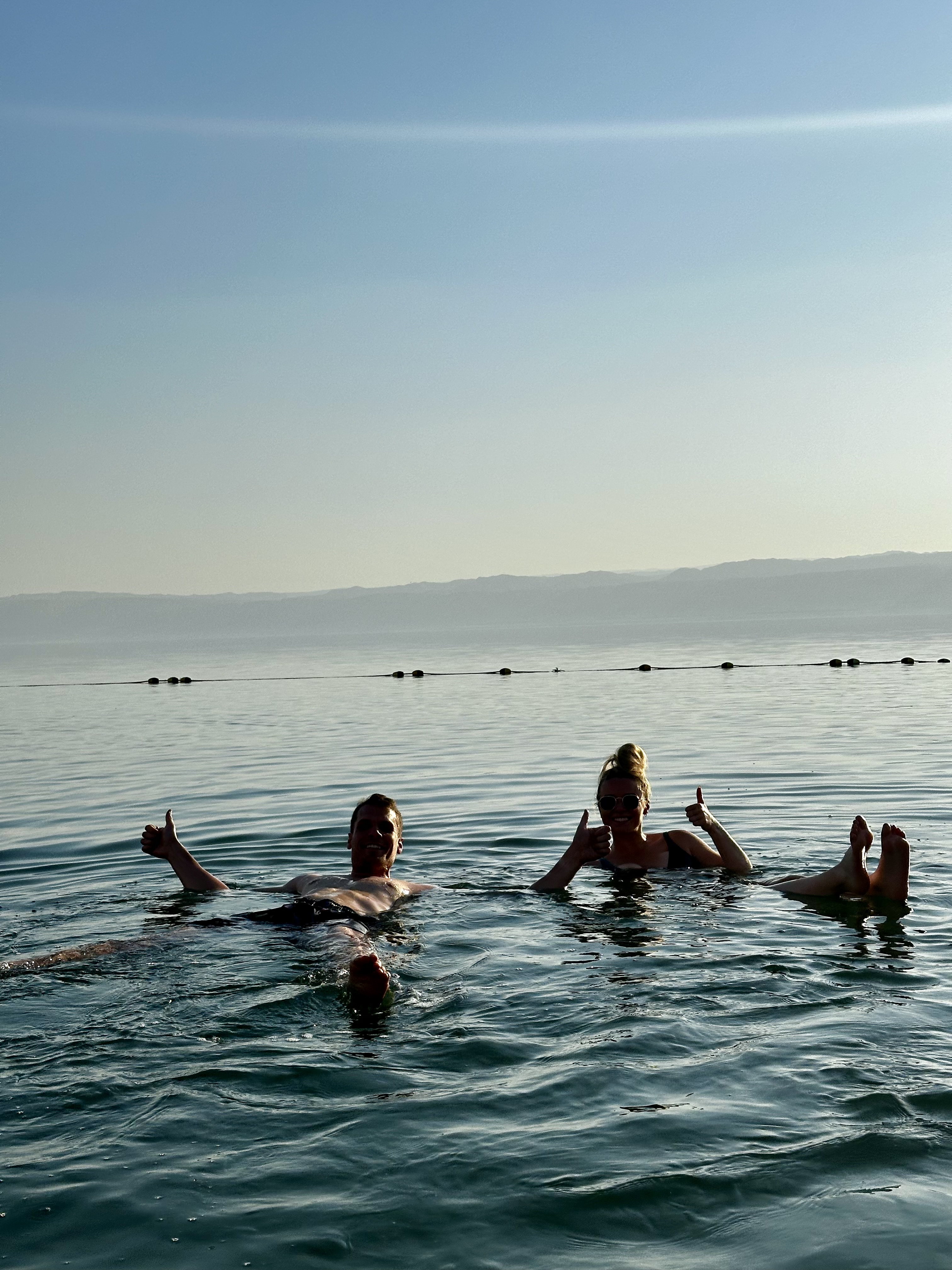
The Dead Sea is famous for its buoyancy. The sea is roughly 34% salt, compared with about 3.5% in the ocean, and we could feel the difference immediately. We knew we would float, but we had no idea how much the water would push us up. Every time we tried to lower our legs, they popped right back to the surface. It felt completely unnatural and was honestly kind of crazy.
It was also unbelievably salty. Even the smallest cuts can sting, so people tend to avoid splashing or getting the water near their eyes. Once we stopped trying to move around and just leaned back, the water did the rest. It was such a weird but really cool experience!
Dead Sea Mud and Salt
The Dead Sea is also known for its mineral-rich mud, which is used in skincare treatments. At Dead Sea resorts, covering yourself in mud, letting it dry and rinsing it off is part of the experience.
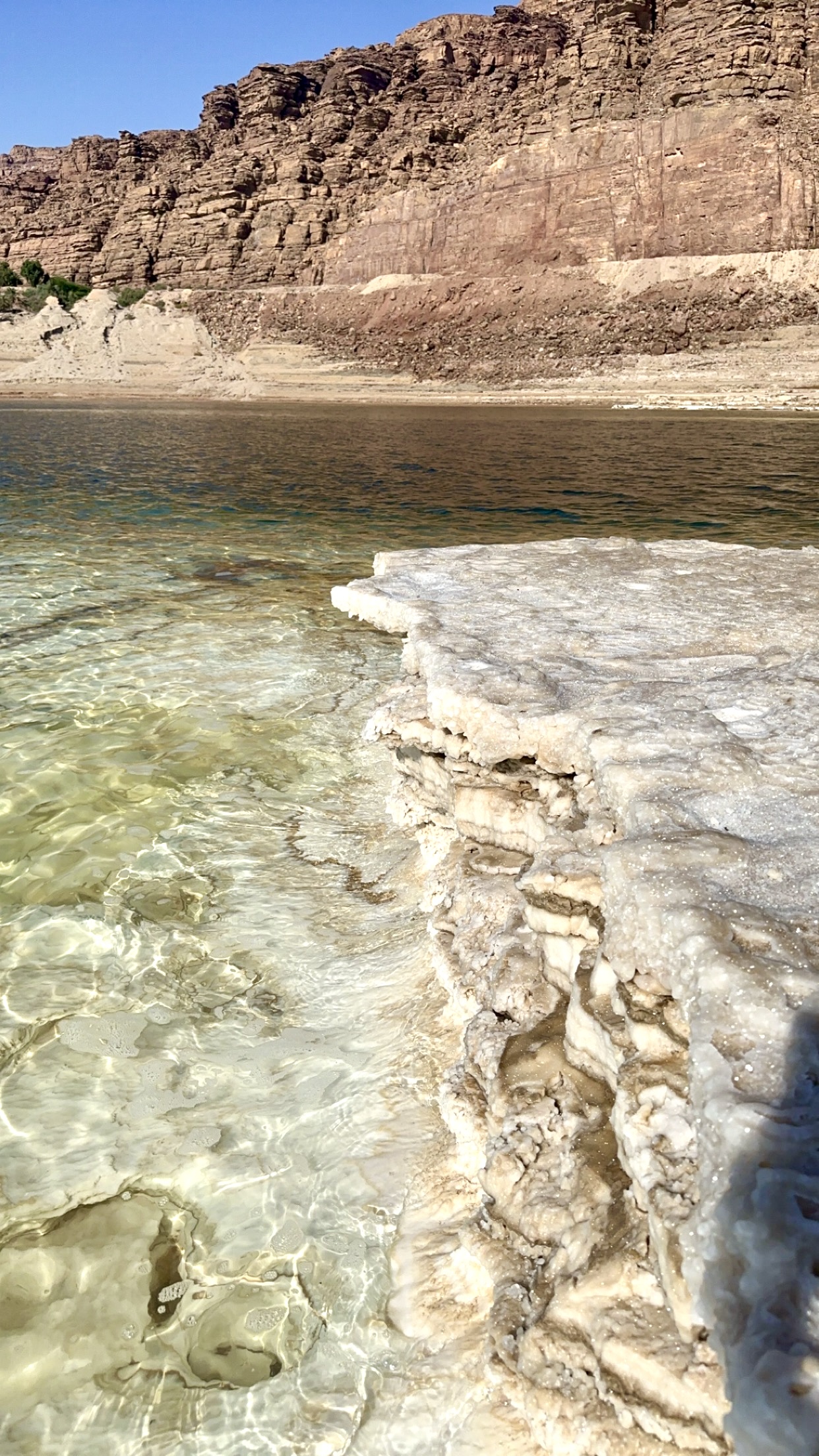
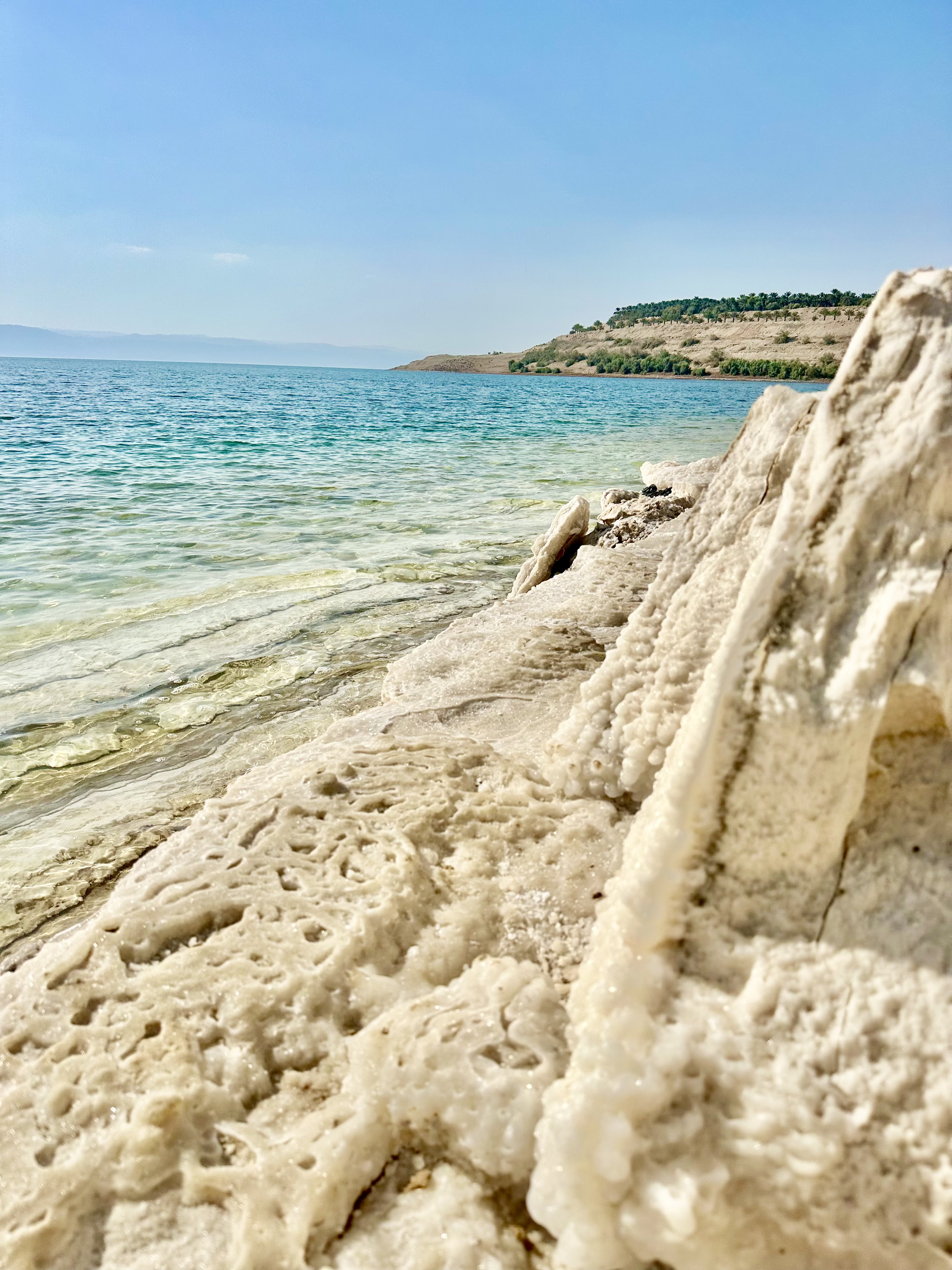
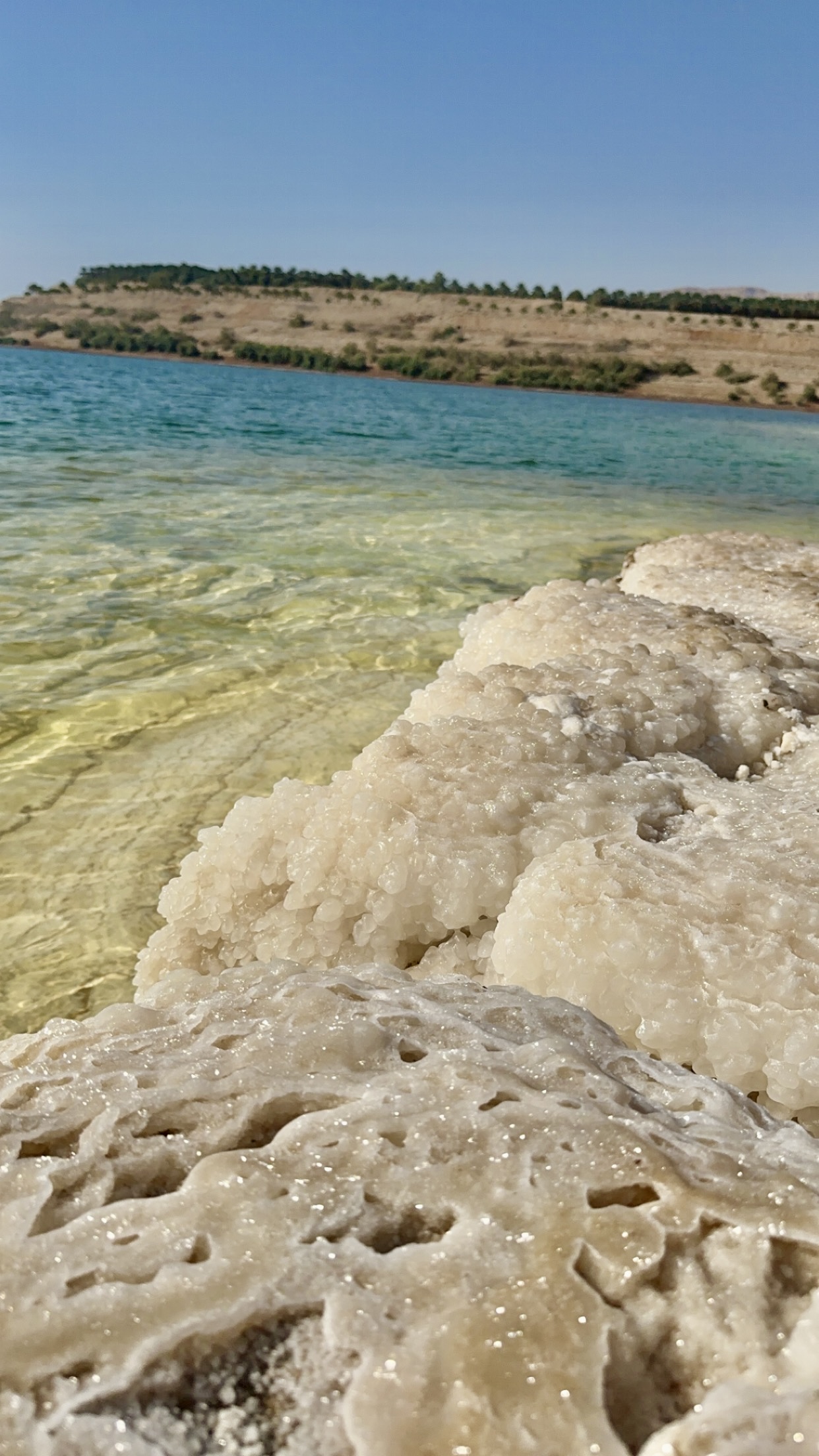
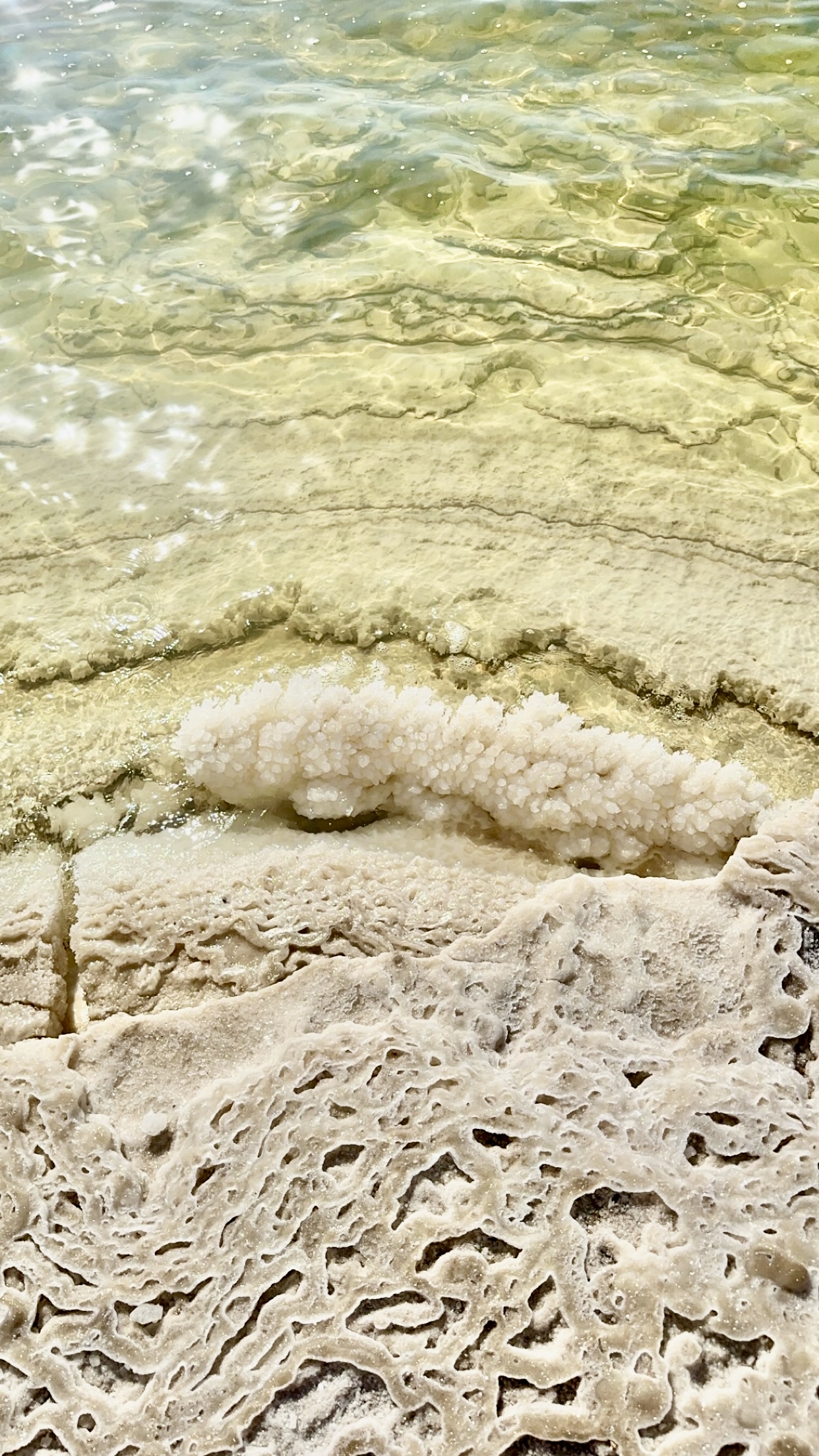
The salt formations interested us even more. We drove to another area where thick white deposits covered the shoreline. The salt formations almost looked like ice or coral.
We broke off a small piece to bring home, and it became one of our favourite souvenirs from the trip. Having an actual piece of salt from a place that really impressed us felt more meaningful than buying something from a store.
The Dead Sea Is Disappearing
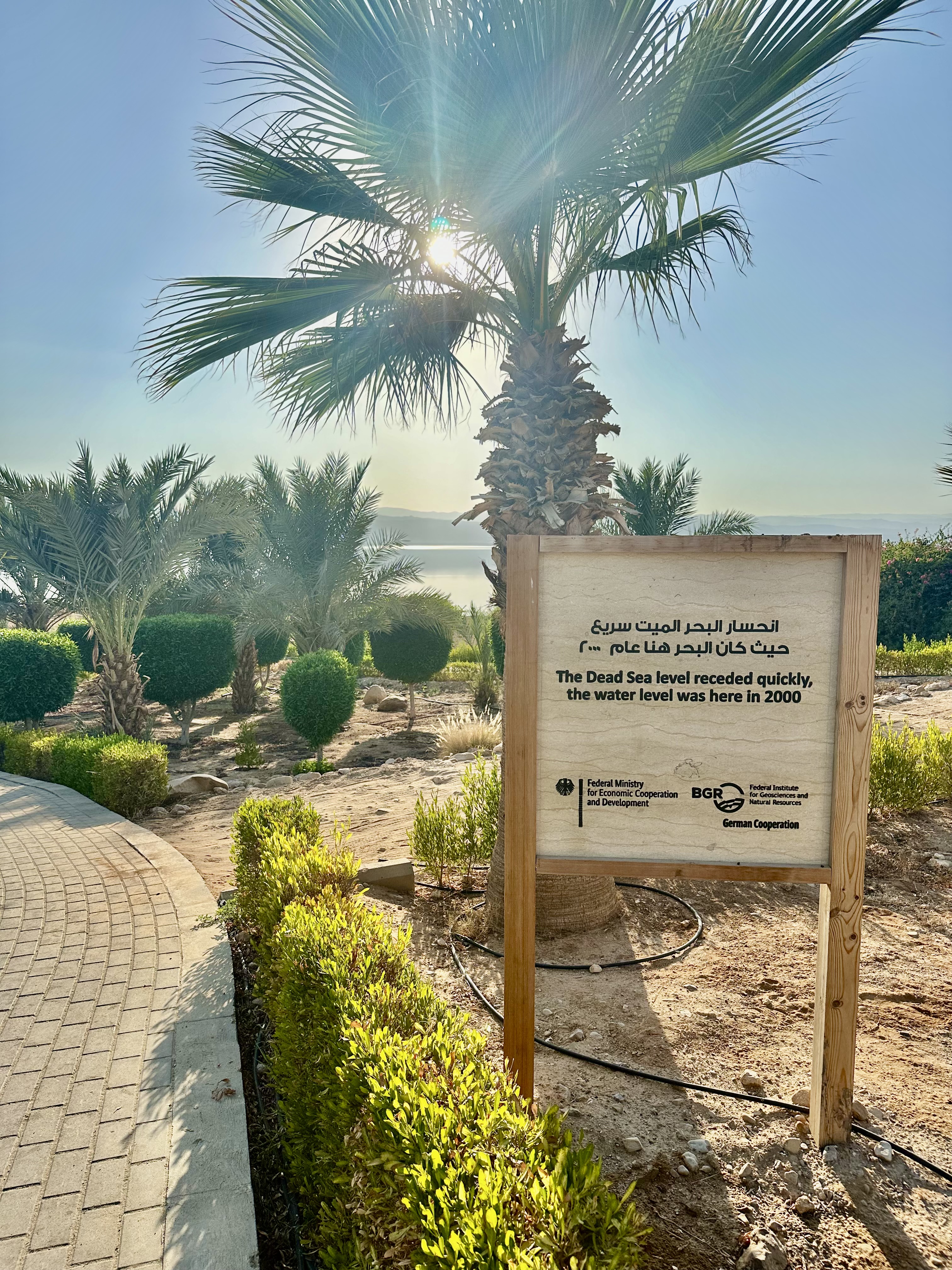
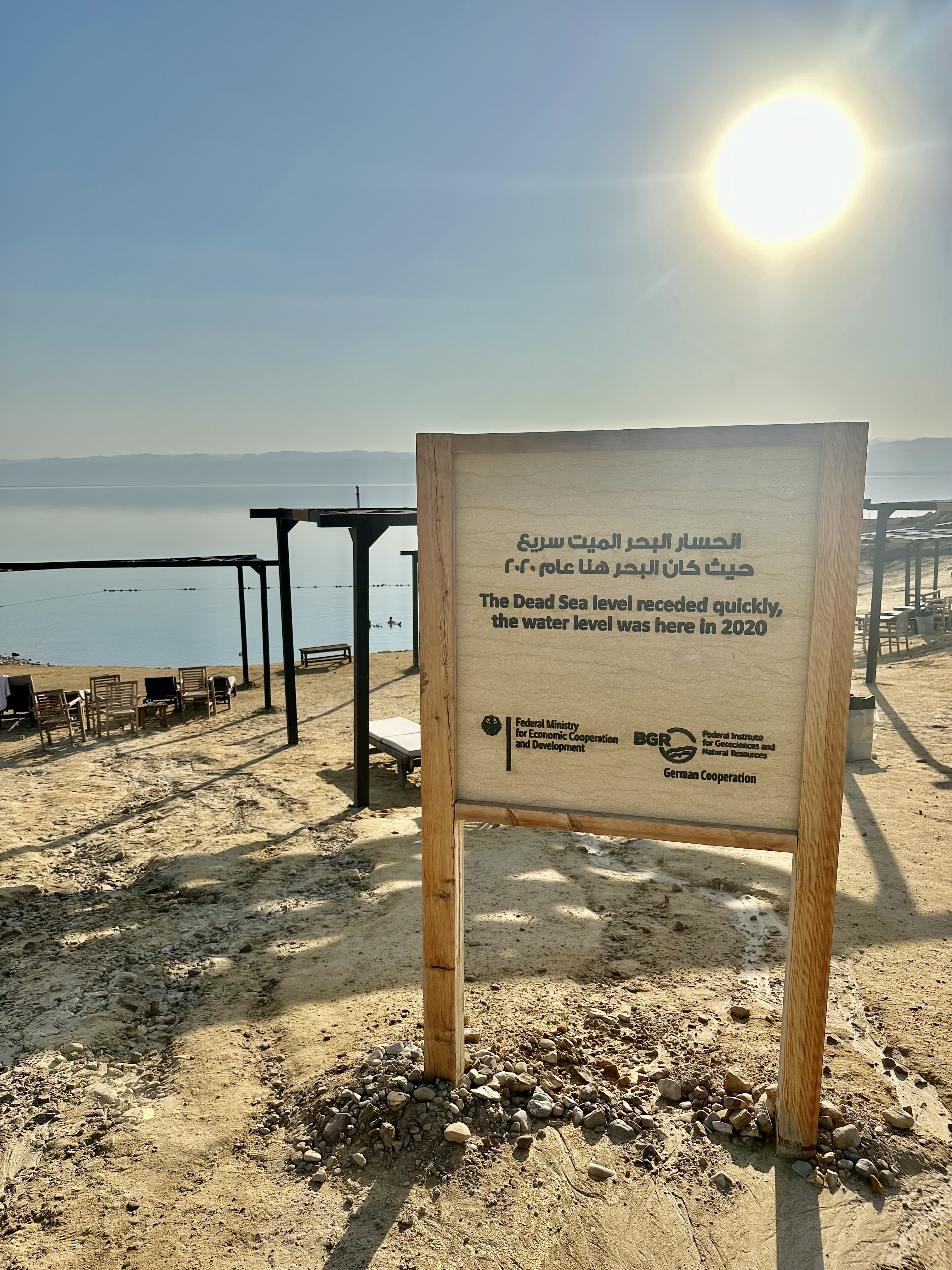
One thing that was impossible to ignore was how quickly the shoreline is receding. Near our hotel, signs marked where the water had reached in 2000 and 2020. The distance between them was alarming.
With no natural outlet, the Dead Sea loses water to evaporation. A lot of the water that would normally flow into the Dead Sea is redirected to supply cities and farms. Water is also pumped into large evaporation ponds to extract minerals. You can see them along the drive.
The water level has dropped about a metre per year in the last decade!
Is the Dead Sea Worth Visiting?
Absolutely! The Dead Sea is one of the most interesting places we have visited so far. Floating feels completely unbelievable, the salt formations are unlike anything we had seen before, and the views at sunset are insane.
Staying overnight gave us time to slow down and properly enjoy the experience.
We would very readily return to Jordan, possibly for another trip combining Amman and the Dead Sea. But there's way more to Jordan than those two places, and the country deserves a much longer trip.
If Jordan is already on your list, the Dead Sea is definitely worth making room for!
Would you add the Dead Sea to your Jordan trip?
If so, we'd love to hear from you. We're always happy to talk travel!
More Articles

Destination Guide
Why Tirana Is One of Europe's Most Interesting Coffee Cities
September 16, 2026 · 6 min read
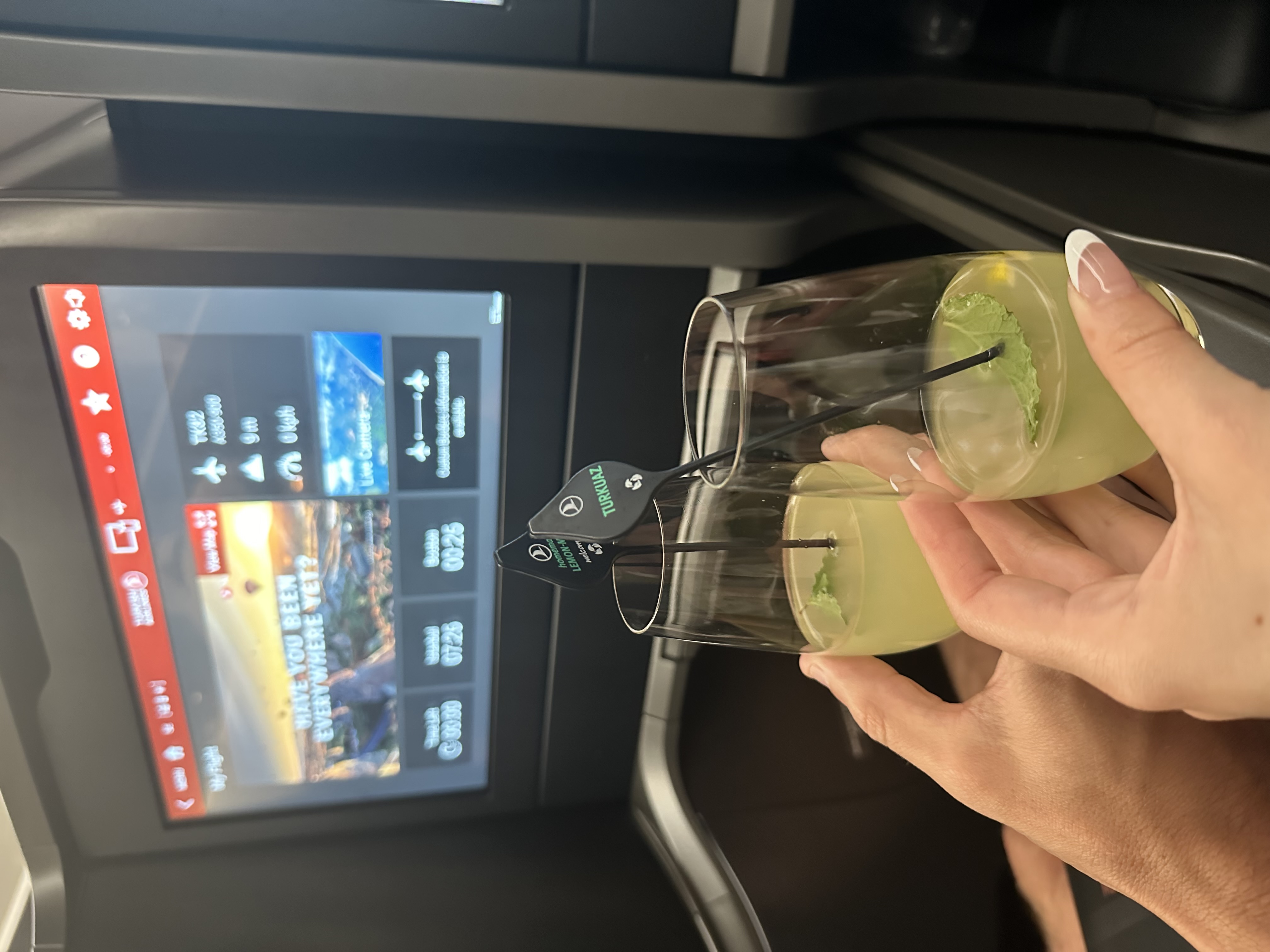
Flight Review
Turkish Airlines A350-900 Business Class Review: Boston to Istanbul
September 9, 2026 · 7 min read
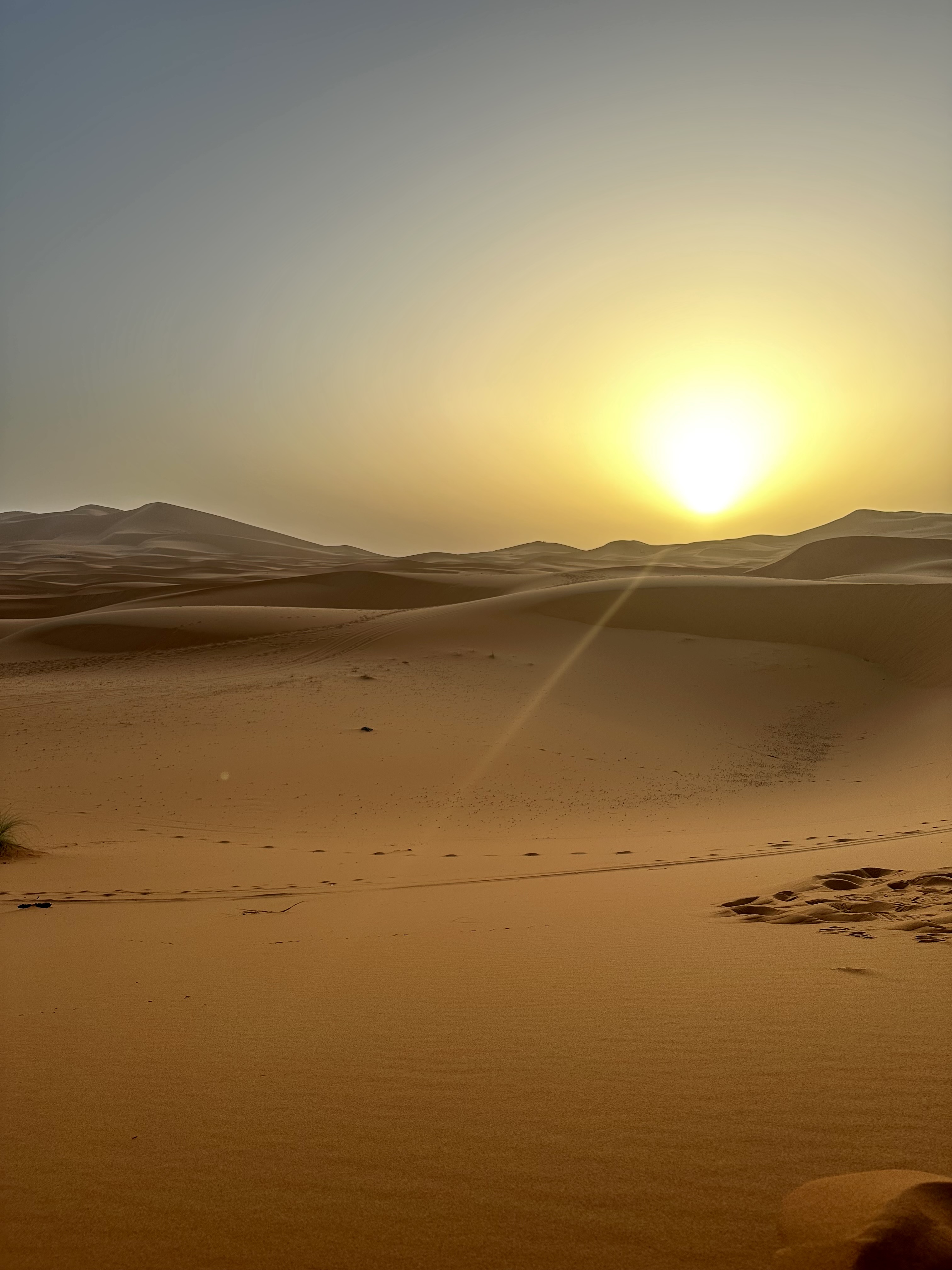
Destination Guide
A Night in the Sahara Desert in Morocco: What It's Really Like
August 14, 2026 · 6 min read
Destination Guide
Why Tirana Is One of Europe's Most Interesting Coffee Cities
Exploring Tirana's coffee culture, from affordable espressos and neighbourhood cafés to specialty coffee. Plus, our three favourite cafés in Tirana.
Flight Review
Turkish Airlines A350-900 Business Class Review: Boston to Istanbul
A full Turkish Airlines A350-900 business class review on flight TK82 from Boston to Istanbul, covering the seat, the onboard chef and dining, service and value for an Aeroplan redemption.
Destination Guide
A Night in the Sahara Desert in Morocco: What It's Really Like
What is it like to spend a night in the Sahara Desert in Morocco? Our experience in Merzouga included camels, sandboarding, a desert camp and sunrise over the dunes.

Scott & Sophie
We're travellers who create destination guides and personalized itineraries to make trip planning easier. Our goal is to help you travel more efficiently, discover authentic experiences, and get more out of every trip.